
 Fractional Career Strategy and L&DLearning and Development ProgramsEmployee DevelopmentCareer DevelopmentFuture of WorkInternal MobilityPeople DevelopmentSkills DevelopmentBlog
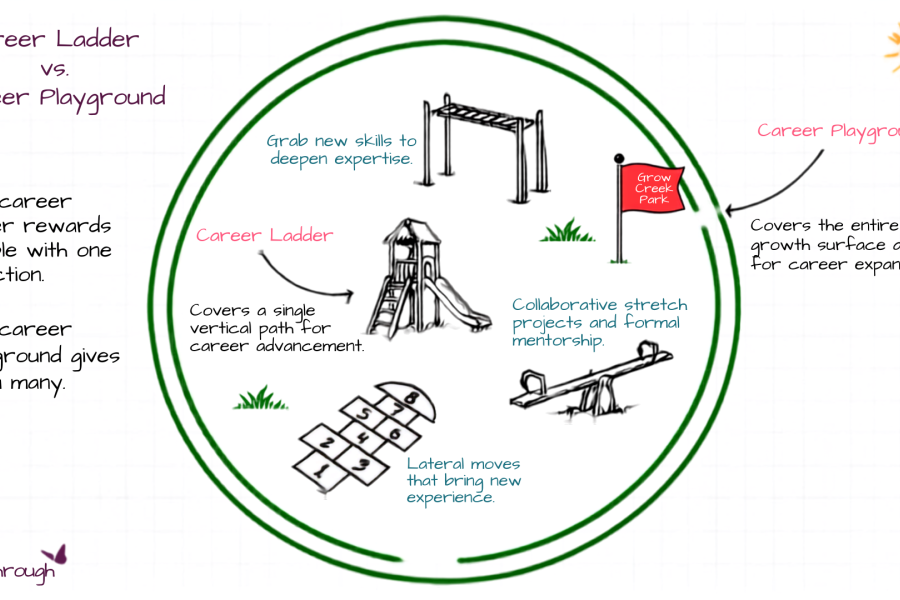
For a long time, moving up in your career usually meant becoming a manager. In most organizations, getting direct reports was seen as a sign of success. But today, many professionals are choosing a different path.
 Career Management Coaching for Managers and Senior LeadersEmployee DevelopmentLeadership TrainingWorkshopsCareer DevelopmentBlog
At Workthrough, we believe that career growth is deeply human. When people feel seen, supported, and encouraged, they’re more confident showing up as themselves and more equipped to thrive in their roles. Our workshops are designed to help employees and leaders develop meaningful skills, build strong relationships, and navigate their careers with confidence, practical tools and clarity.
 Fractional Career Strategy and L&DCareer Management Coaching for Managers and Senior LeadersEmployee DevelopmentCareer DevelopmentCoaching for ManagersLeadership DevelopmentSkills DevelopmentResources
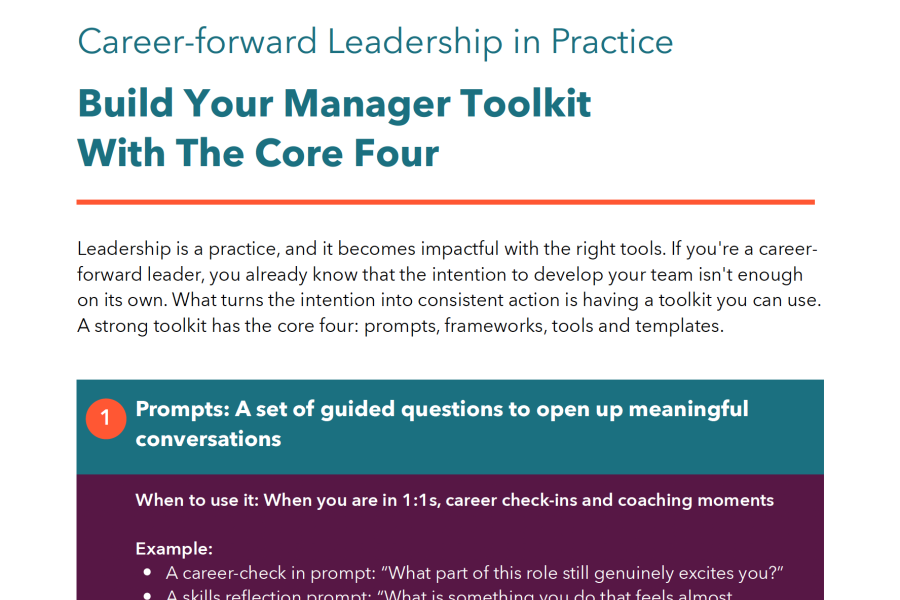
Leadership is a practice, and it becomes impactful with the right tools. If you're a career-forward leader, you already know that the intention to develop your team isn't enough on its own. What turns the intention into consistent action is having a manager toolkit you can use. A strong manager toolkit has the core four: prompts, frameworks, tools and templates.
 Career Management Coaching for Managers and Senior LeadersEmployee DevelopmentCareer DevelopmentRole ClarityInternal MobilityPeople DevelopmentSkills DevelopmentLeadership DevelopmentResources
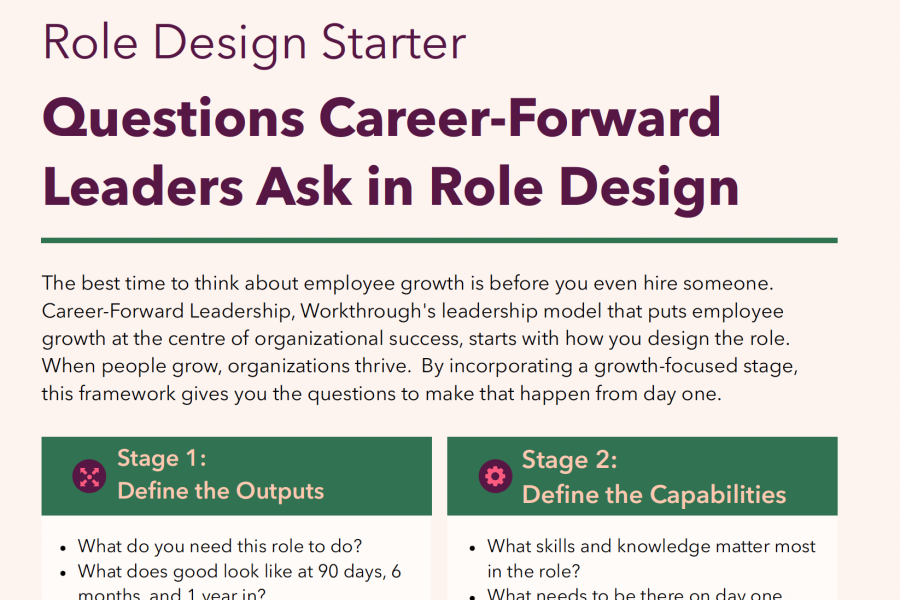
Career-Forward Leadership, Workthrough's leadership model that puts employee growth at the centre of organizational success, starts with how you design the role. By incorporating a growth-focused stage, this framework gives you the questions to make that happen from day one.
 Career DevelopmentFuture of WorkWorkplace CultureSkills DevelopmentRole ClarityBlog
“Must be able to work in a fast-paced environment.”
This familiar line has stood the test of time on job descriptions. Being able to work in a fast-paced environment is an evergreen requirement and something you expect to see on almost every job ad. Many of us first developed this skill in our earliest roles: a fast-food restaurant, a busy department store, a high-volume office. And it followed us into our careers.
 Leadership DevelopmentPeople DevelopmentFuture of WorkSkills DevelopmentBlog
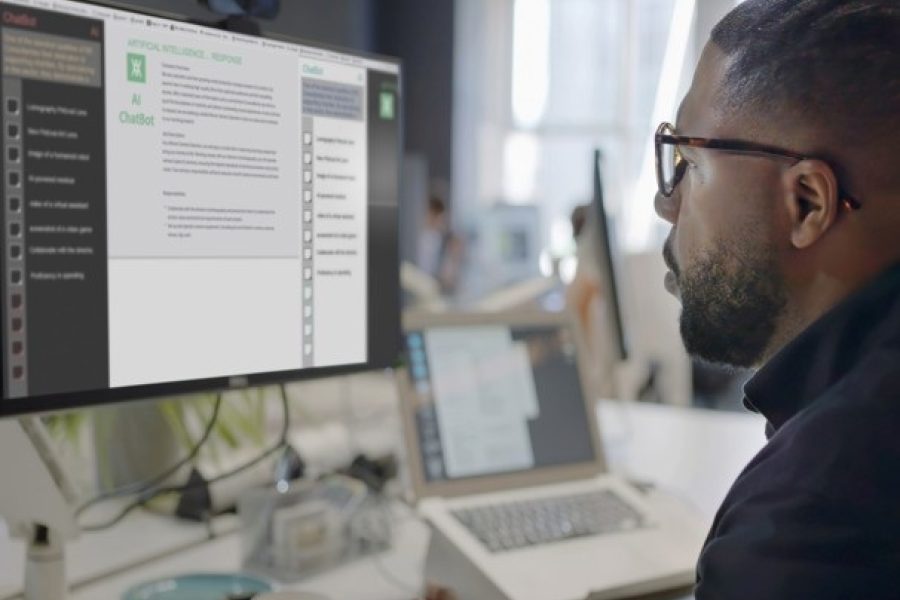
Technology is evolving quickly, job roles are shifting, and expectations around work look different from what they did even five years ago. Employees need leaders who can guide them through these shifts with confidence and clarity. This is where career-first leadership becomes essential. It’s an approach we are leading at Workthrough, and it prioritizes people development as part of everyday management, not as an afterthought.
 Future of WorkEmployee EngagementCareer DevelopmentWorkplace CultureBlog
The “future of work” has become one of those phrases we repeat so often that it almost sounds like a destination. And yes, I’m absolutely someone who loves imagining what comes next: new tools, new ways of working, new possibilities. But as inspiring as all that is, it’s difficult to fully lean into the excitement when so many workers are navigating challenges that demand attention today. If we’re serious about shaping the future, we have to be equally serious about the present reality people are experiencing.
 Manager TrainingLeadership DevelopmentCoaching for ManagersPeople DevelopmentBlog
One of the most valuable capabilities a people leader can develop is knowing when to coach, when to manage, and when to direct. Each approach has a purpose, and effective leadership is about choosing the right strategy for the moment rather than relying on a single style.