For a long time, moving up in your career usually meant becoming a manager. In most organizations, getting direct reports was seen as a sign of success. But today, many professionals are choosing a different path. They prefer to focus on their craft instead of climbing the org chart, and moving into management can feel like leaving behind the work they enjoy most. A 2026 survey found that 41% of job seekers are not interested in becoming managers, and most of Gen Z would rather build their own expertise than manage others. So how can people keep growing if they don't want to lead a team?

Let me introduce the idea of the career playground. Picture yourself as a kid at recess. Instead of just climbing the ladder to the top of the slide, you swing on the monkey bars to pick up new skills, play hopscotch to make valuable lateral moves, and spend time on the seesaw to work on challenging projects and learn from mentors. This is how many people want to grow today, and organizations can support this approach instead of losing talent by forcing people into a single path.
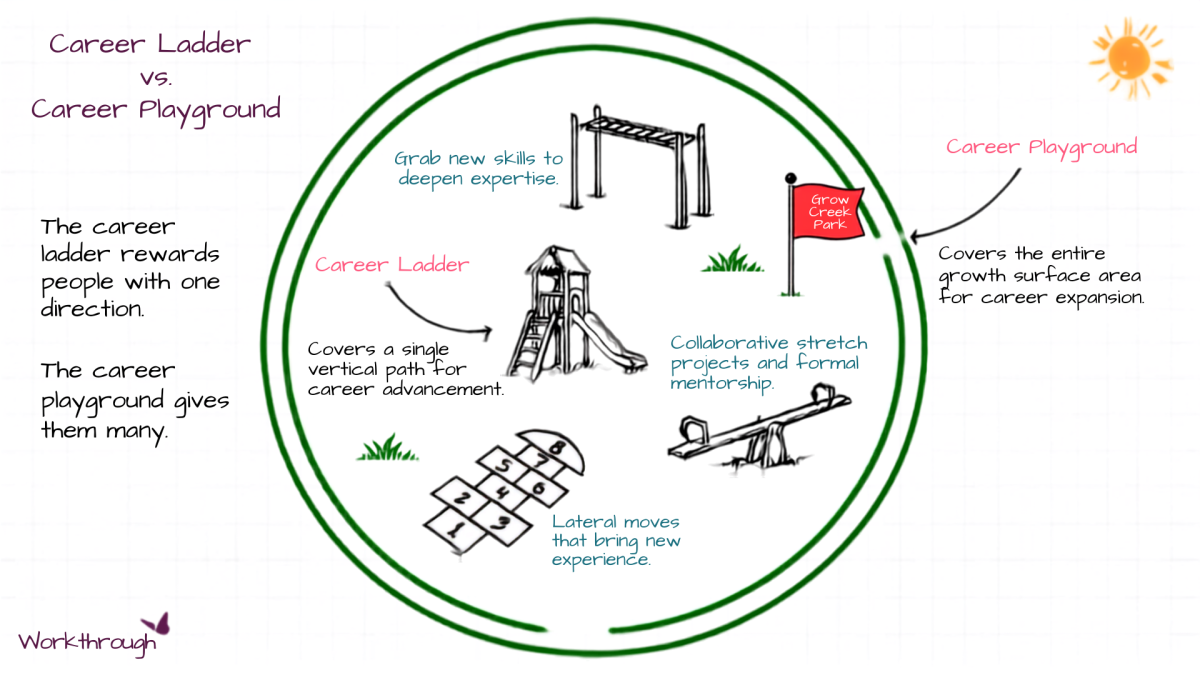
Seven Reasons to Create a Career Playground

1. Eventually, the career ladder ends, and people hit a ceiling because of how your organization is traditionally structured, not because of their skills.

2. Most people don't leave over their job title. They leave when they have no room to build new skills.

3. As AI handles some routine work, a career playground helps your managers be intentional about how entry-level employees gain experience that develops their knowledge and judgment.

4. Autonomy and opportunity win. People are more engaged at work when they have the freedom to explore, deepen their skill set, and test new ideas.

5. Because most careers don't follow a straight path, your company's structure should reflect that reality.

6. You can reward growth by adjusting pay to reflect someone’s depth of skills and results, showing you value their contributions even if their title doesn't change.

7. People need to adapt. A wide range of skills is more useful than narrow specialization, especially when the work environment changes.

The ladder will always matter, and many people still want to climb it. But it was never supposed to be the only path for growth. When you offer people a whole playground instead of just one rung, you keep your best talent from leaving to find new challenges. You also help your organization build the range of skills it needs as work keeps changing for everyone. Growth isn’t just about advancement. It’s about expansion, and companies that get this are the ones people want to stay with and grow.